

Mother May I?
A Mother's Day reflection


One player—the "mother" or leader—stands at a distance, back turned to the others, while the others try to reach her (or him). Players must ask permission to take steps—such as, "Mother, may I take 3 giant steps?, to which the leader can respond “Yes, you may” or “No, you may not”, and has the option to offer a counter-suggestion (“You may take 2 baby steps”, for instance). Players who move without first asking "Mother, may I?"must return to the start.
The first player to reach the Mother wins, and becomes the new Mother for the next round.
It’s the simplest of children’s games, but one that supplied hours of fun and laughter when we were kids. And it’s predicated, of course, on the cardinal role that mothers play in guiding and shaping the actions of their children.
That maternal influence never dissipates, even when the kids are all grown up, although it changes, morphing into more of a role as advisory and sounding board, a loving and listening ear.
But the time comes for all of us, eventually, that our mothers depart, as my own did more than two years ago; and it’s as if a rudder is stripped away from the family, and we’re forced to find a new way to steer—a new way, but one influenced heavily by the memories of Mom’s counsel and direction.
No mother (and no parent), is perfect, of course. All of us with kids are trying our hands at it for the first time; mistakes—and the learning embedded within them— are inevitable. But—and I’m biased of course—my own mother’s journey through parenthood was more remarkable than most.
Re-printed below is an ode to my Mom, which I published shortly after her passing in January of 2024. ‘Tis a weekend of remembered tributes: yesterday in this space I ran a previous piece honouring the great columnist Rex Murphy on the anniversary of his demise. The loss of my Mom, obviously, is far more personal, far more monumental.
Happy Mother’s Day to all the moms out there.
The Last of the Matriarchs
Jan 30, 2024
Genesis is defined in Merriam-Webster’s online dictionary as “the origin or coming into being of something.”
We all have a genesis story. But my mother’s origins were indeed quite something.
She was born the second of eight children on April 9, 1930, in Oude-Tonge, a small town of about 3,000 souls located on a small delta island tucked into the south coast of Holland. It was a time of upheaval, with the world in the early throes of the Great Depression, the global economic catastrophe that afflicted much of the 1930s.
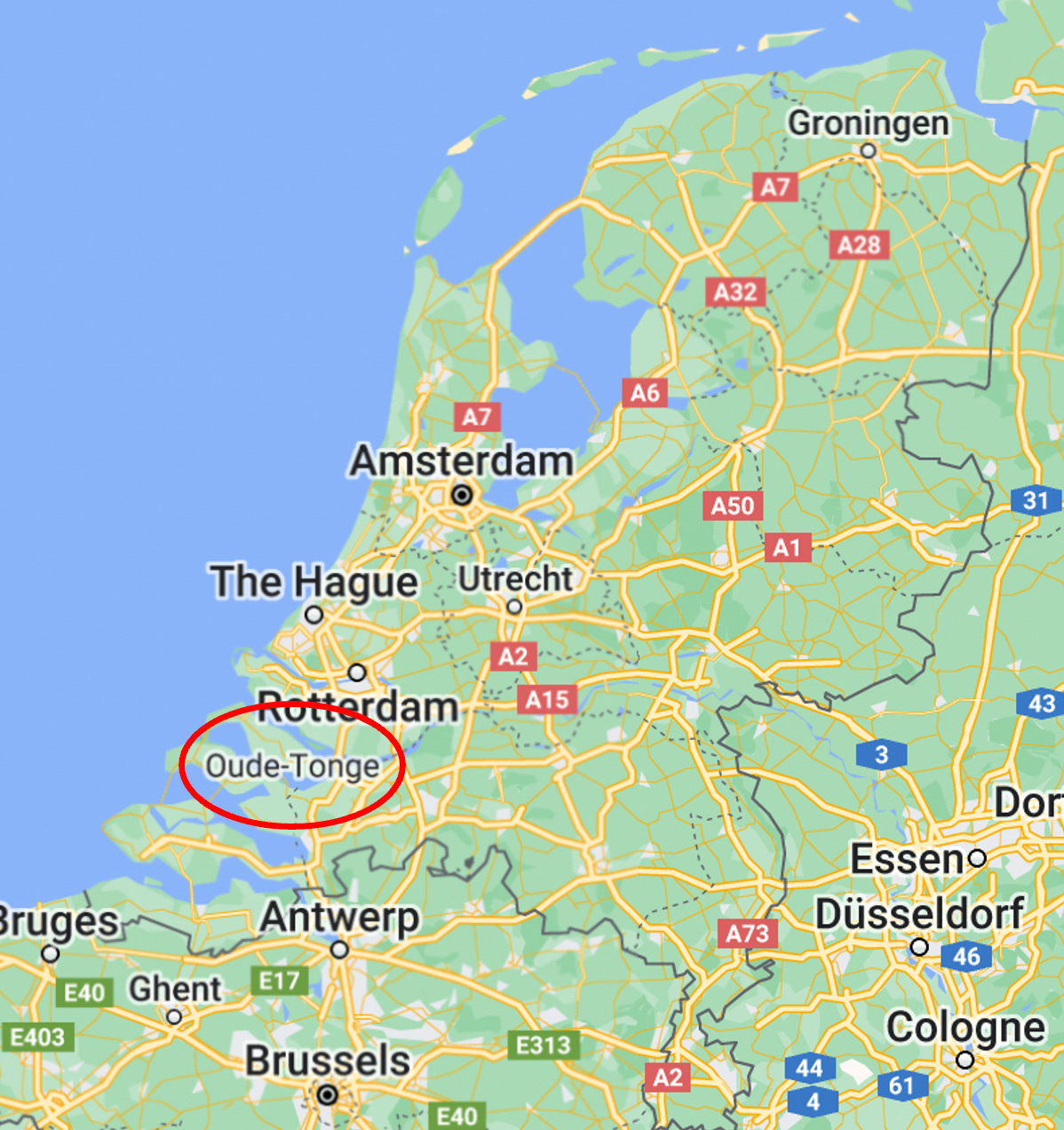
The Depression played a huge role in the rise of Nazi Germany, which led directly on to the Second World War. The Nazis occupied Holland for five years; in 1944, in a bid to thwart Allied plans to land on the coast, they breached the dikes that held the frigid North Sea at bay. Oude-Tonge and its environs were completely submerged. All residents were forced to evacuate hurriedly to other parts of Holland; they returned in 1945 to a landscape slathered in mud and ruined by salt water.
All of that in just the first 15 years of Mom’s life.
After the war, Holland and much of Europe lay in ruins. The task of rebuilding began immediately, but it was an arduous period of scant housing and economic difficulty. It was during that period that Mom met my father; they dated for a few years and married on June 5, 1951. Just ten days later they set sail for Canada, joining the great exodus of Europeans seeking opportunity in North America. They arrived in Chilliwack, British Columbia with little more than the clothes on their backs.
They didn’t have much, but they had each other, and they were infused with boundless optimism and energy. And they were supported by a tight-knit band of fellow immigrants united in faith and common origins.
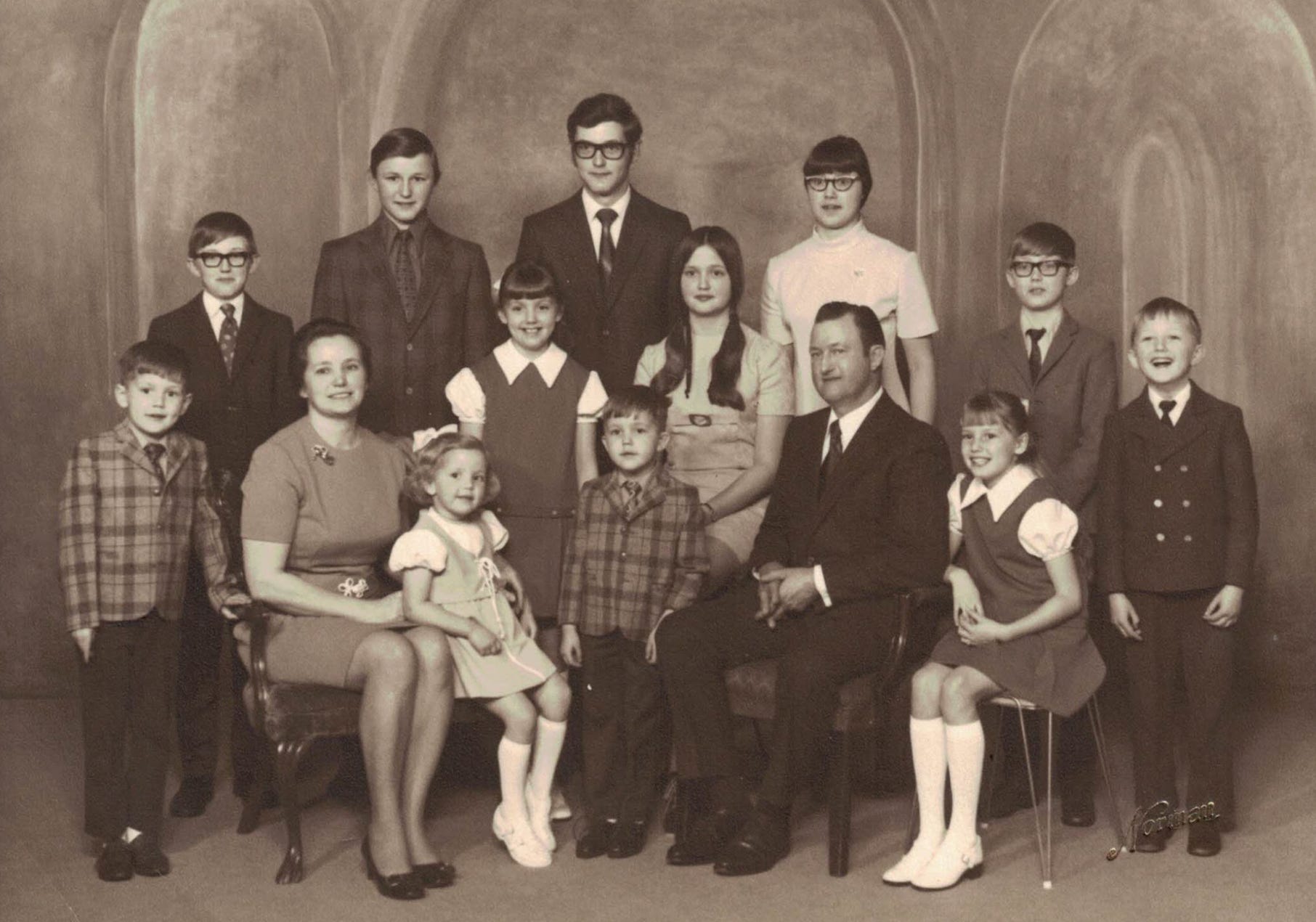
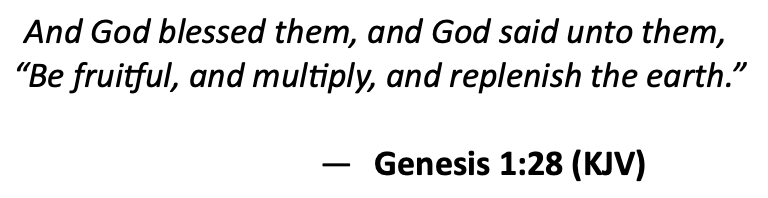
Mindful of the Biblical admonition to “be fruitful and multiply”, the immigrants were every bit as fertile as the Fraser Valley they now called home. My parents were no exception: by September of 1959 they had produced half a dozen children.
Child number six, Chris, arrived a bit early, which was a tad inconvenient — money was tight and the monthly payment for the milk my parents produced on their small dairy farm hadn’t yet arrived. To raise the five dollars needed to spring Mom and babe from the local hospital, my father shook a bunch of plums from trees in the orchard and sold them to a local cannery.
Six more children followed to complete the dozen. Marlene, the last in the train — the “caboose” — arrived in 1968.
By monetary measures our family was poor, especially in the early years, no matter how hard our parents worked. Children, as it happens, aren’t cheaper by the dozen.
But our lives were rich in all the ways that mattered, as rich as the soil our parents tilled — lives thoroughly infused with colour, activity, freedom to roam, and a deep connection to the land; lives nourished with huge helpings of both work and play.
As with all families there was turbulence — in our case multiplied by twelve. Our parents weren’t perfect, and nor were we. We could be an unruly bunch, and the scriptural admonition “to spare the rod is to spoil the child” was no match for our gang — there were too simply too many kids to shake a rod at.
We generated plenty of dirty laundry, literally and otherwise. Mom didn’t have a washing machine to clean the literal stuff until after kid number ten arrived; and as for the other kind — like most families we mostly sorted it out and carried on.
Large families were nothing new, historically. Former Prime Minister Jean Chrétien, to take a famous Canadian example, was born in 1934 as the eighteenth of nineteen children. But ten of his siblings died in infancy and childhood; prior to the modern era of antibiotics, public sanitation, and effective vaccines it was common for families to lose children. The post-war era was the first time in history that large families like ours could reasonably expect all the children to survive to adulthood.
But it’s unlikely that we’ll ever see another era like the one in which my family grew up. Not that childhood mortality has done a U-turn. It hasn’t: almost every child born today can expect to see adulthood, and life expectancies are double what they were one hundred years ago.
But people have simply stopped having kids. Birth rates are plummeting all over the world; the rate in Canada is a measly 1.3, well below the number needed to simply replace those already here. The world is aging rapidly and is perched on the edge of precipitous population decline. Canada is shielded — for now — by robust immigration rates; but that won’t continue forever.
A kid like me, clocking in at number eleven (and seventh of seven sons), wouldn’t be born today. Ditto for a Jean Chrétien. Or, for that matter, a Céline Dion, who arrived as the last of a tribe of fourteen. Or a Thomas Edison, who was the seventh of seven children.
Some might see the radical shrinkage of family size as progress, as the pinnacle of family planning “success”. I certainly don’t see it that way: we’re not just stripping the world of youth and energy and optimism and ingenuity — we’re planning ourselves into extinction.
In late November I flew from Calgary to visit with Mom. Age had dimmed her hearing and diminished her vision, but her mind remained as sharp as a tack. She reminisced, as she often did, about the “best years” — the years when she had her children about her and she was baking innumerable loaves of bread, making garments from scratch and hanging endless reams of hand-laundered clothes out to dry. She was run off her feet — but they were the happiest days of her life.
Just weeks after our visit she had the first of a series of strokes. She died on January 15 at the age of 93, matriarch to forty-eight grandchildren, eighty-nine great-grandchildren, and two great-great-grandchildren. The scene at the church after her funeral service, as her large tribe gathered around her coffin at the front of the sanctuary, was something to behold.
Most of us have more money than my mother ever did; we enjoy creature comforts and houses of a size she could never imagine; we’re educated far beyond the 8th grade level she was able to attain; and we vacation and play to our hearts’ content.
But despite all that, I wager that few among us will ever be able to match the incredible richness of the life that she lived.
We miss you, Mom.
What an incredible reflection Dr. Les. My parents had 7 children. We have 3. Looking back now, I wish we had a couple more. I know others who came from big families too and the stories are so interesting. As you say, not having the luxuries of today, but having the joys (and heart aches) of a closely knit tribe. Thank you for sharing about your mother and for sharing the piece on Rex Murphy too.
What a great read. Your mother sounds like she was an amazing woman.